

How to keep design teams steady through constant change



Drawing on her time at Patreon and Shopify, design leader Jen Dunnam offers her advice for this new age of AI—from building a strong team to how to think about speed.
Share How to keep design teams steady through constant change



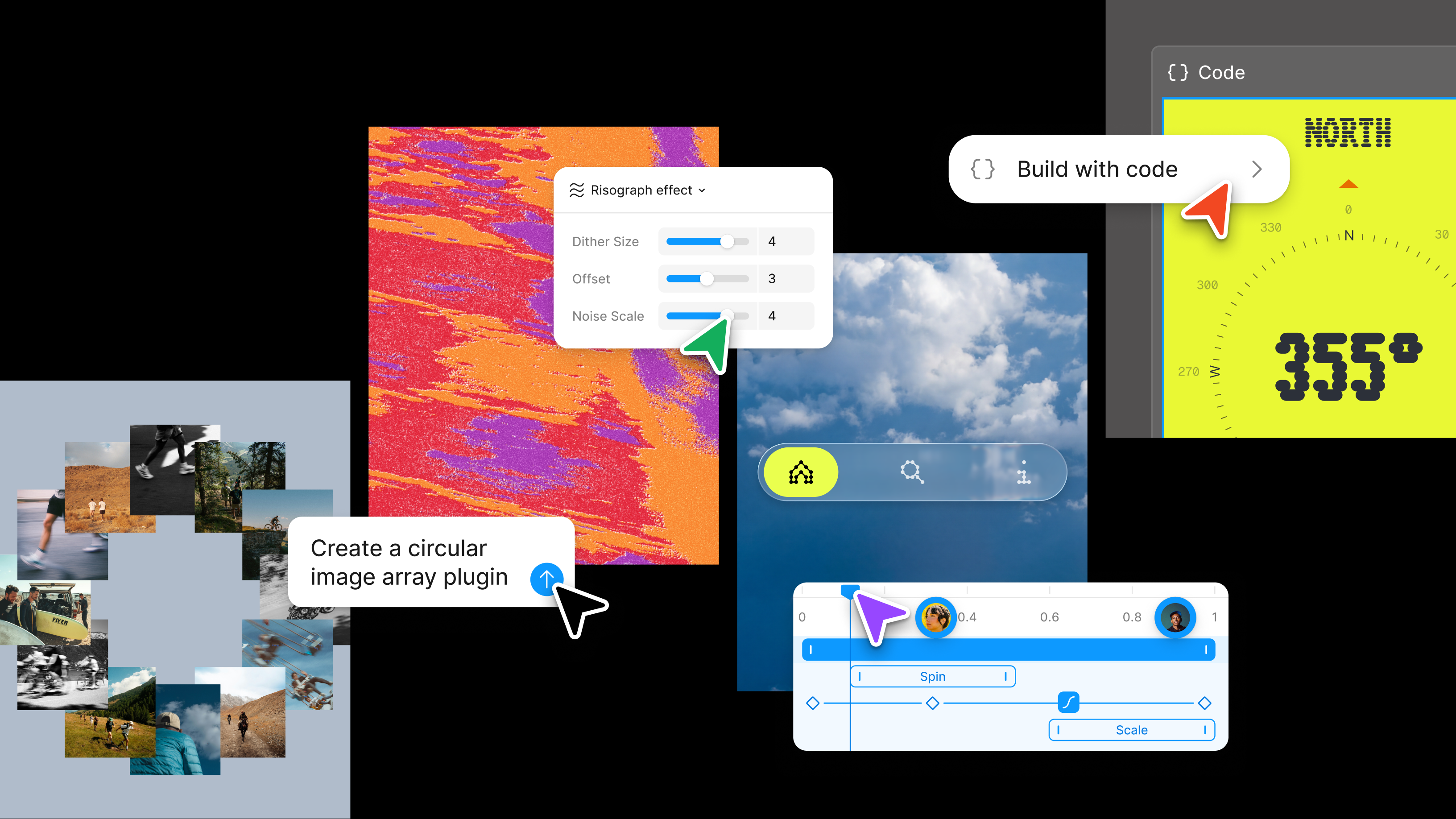
Leadership Collective—Figma’s program for the leaders shaping the future of product, design, and engineering—drew more than 1,300 attendees to Config Push past what you thought was possible with code layers, Figma Motion, shaders, generative plugins and Weave tools, all on the canvas.
Config 2026: New materials, new tools and a more expressive canvas
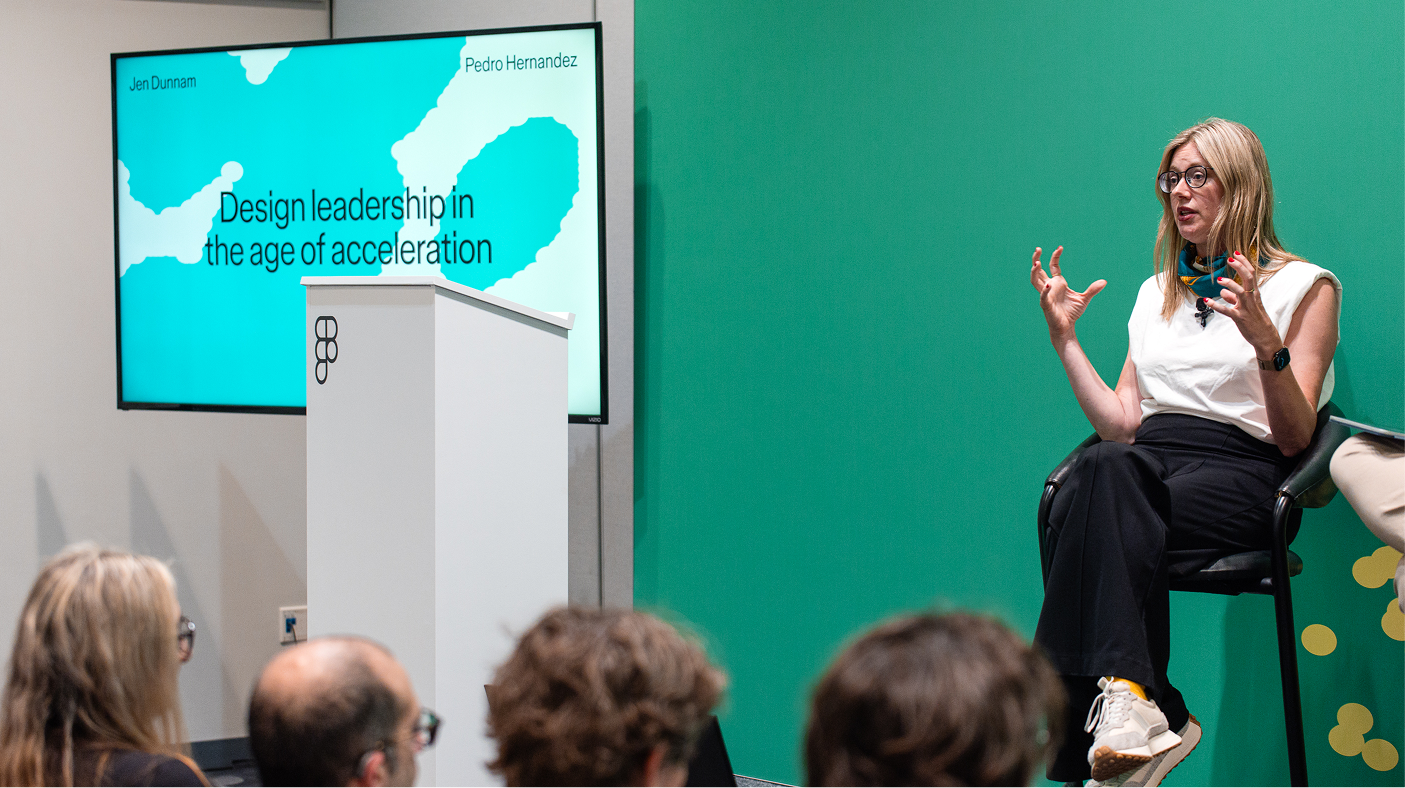
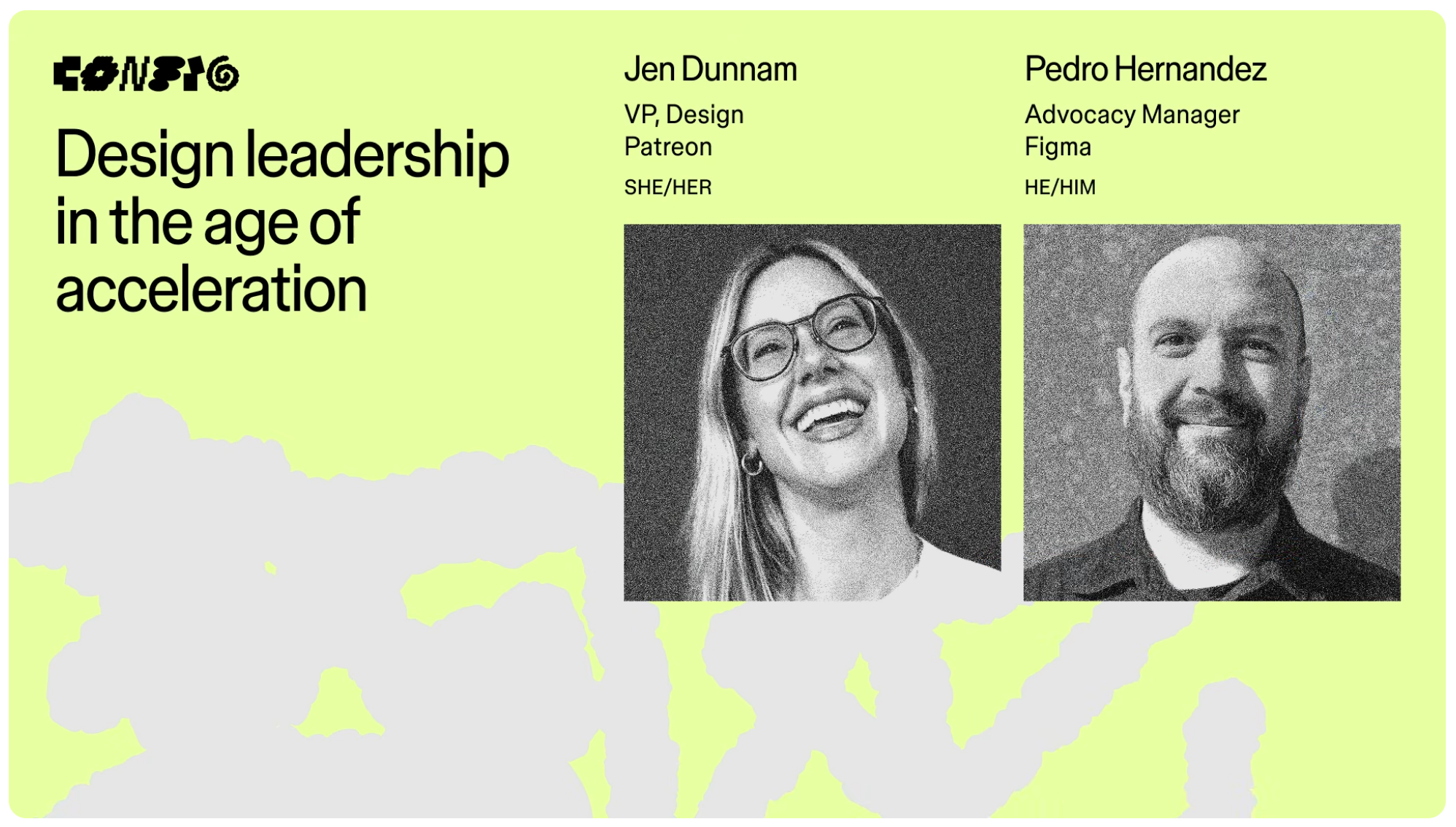
There's no established playbook for leading a design team right now. Jen Dunnam, former VP of Design at Patreon and Head of Design for Shopify's online store, focuses on keeping her team steady and thinking clearly. She sat down with Figma Advocacy Manager Pedro Hernández to share what she's learned. Below are the highlights from their conversation.

Lead with calm
How do you keep a clear head amid all the AI noise?
I take a slightly different perspective on AI than some of my counterparts. I want to move quickly, but I have a little less panic over it. I’ve spoken with leaders who feel like their role right now is to instill urgency, but the great designers I work with are already bringing plenty of that intensity themselves.
I’ve found my job is more to steady things. To say, “Let’s break it down, strategize an approach, play with the right tools, and sharpen our principles.” I try to show up as a designer and human first. With AI, there’s a risk of chasing a tool, chasing capabilities, chasing something that's going to remake our world—but fundamentally, we’re still designing for humans. That’s not shifting. My overall perspective is to stay grounded, steadily experiment, and learn.
With AI, there’s a risk of chasing a tool. But fundamentally, we’re still designing for humans. That’s not shifting.
Hire for critical thinking
If you were building a design team from scratch today, what would you do differently?
For starters, I really believe in the talent of people fresh out of school. Some of the urgency around the pace of shipping today has left a lot of them out, so they’re a group I’d make a point of investing in. I’d pair them with more experienced people who can quickly turn things into a product that can ship. I'd also look for researchers with the curiosity and interest to contribute as designers—people who prioritize getting the right insights but aren't afraid to also be decisive, opinionated, and deeply convicted about the product implications.
What is a trait that has gone up in value when hiring In the AI era, companies need designers more than ever. In fact, our latest study suggests that AI is actually driving renewed momentum in design hiring. We unpack why that is, what hiring managers are prioritizing, and which skills designers need to get ahead.
Why demand for designers is on the rise
Critical thinking skills are more important than they’ve ever been. When I interview designers for my team, I have to probe really hard for it. Where did they dissent? How did they push back on a stakeholder? What are they still upset about that wasn’t in the product? That rigor matters especially now, because with AI, we have all these tools that look so good, and there’s a risk of defaulting to the thing that looks shiny or sounds right instead of thinking it through.
Build a team that will push back
What’s a signal that tells you your team is working well?
If I’ve created an environment where they feel like they can voice dissent and really fiercely debate one another, that’s a sign it’s working. If I see a team just nodding along, either they’re not being truthful with me, they’re disengaged, or they’re outright confused.
How do you protect the space and the time to give people the opportunity to grow their critical thinking skills?
The best way to protect the space is the classic design critique. That’s a really important moment where the designers come together, and the design leaders—myself included—have to model that behavior. Are we making a decision, but staying comfortable enough to question it a week later and say, “Let's break it down and rethink”? Modeling that is the best way to teach the people it doesn’t come naturally to, and to make clear there’s a safe space to ask questions and strip the work down.
Beyond the crit, how do you protect time for that kind of thinking? Is it a block on the calendar? A task they repeat every sprint?
It’s more about carving out dedicated stretches, and it depends on the outcome you’re looking for. If we’re creating space for new ideas, my experience is you need to designate several days for that (not weeks—I’ve moved past the idea that you need six weeks to do an innovation sprint). I like to dedicate time at an off-site where no meetings and no deliverables are necessary, which is important for designers, researchers, and creative technologists.
Get specific about the speed you need
You led teams at both Shopify and Patreon—very different cultures, very different audiences. What does this contrast tell you about designing in this context of acceleration?
Every company I’ve worked for wants to move fast. But what I’ve learned is that it’s important to be clear upfront about what kind of speed matters to the organization. The mistake is thinking speed is one thing. There’s a classic principle that between fast, cheap, and good, you only get to choose two. But leaders tend to want it all: rapid ideation, beautifully crafted execution, and new functionality. The real work is having hard, honest conversations about that tradeoff and asking: which two matter most right now?
At Shopify, for example, speed meant quickly rebuilding a core product to better serve the community of developers. Patreon needed a completely different kind of speed. They were rapidly expanding into a media and community platform, so speed there meant shipping a lot of new functionality quickly through a lot of MVPs to see how creators might build a business with those tools.
Every company wants to move fast. But it’s important to be clear about what kind of speed matters.
Jen is one of many leaders rethinking how they work in the age of AI. To hear how others are approaching the same questions, read the 7 questions we brought to Config Leadership Collective We showed up to Leadership Collective hoping to learn how leaders are guiding their teams through change, what expertise means now, and how they're keeping quality high as the pace picks up. Here's what we heard.7 questions we had going into Config Leadership Collective
Emma Webster is a writer and editor on Figma’s Story Studio team. Previously, she’s worked as a writer at Faire and Audley Travel.